Military Dog Tag: A Practical Embroidery Design Review
First Impression: Clean, Bold, and Instantly Recognizable
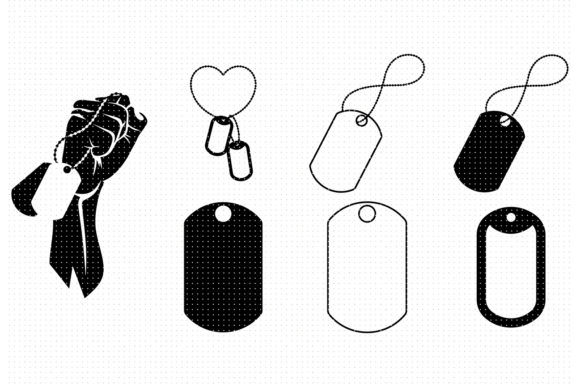
When I opened the Military Dog Tag files, my first thought wasn’t “cool graphic”—it was “this will stitch cleanly.” The shape is classic: a rectangular oblong with gently rounded corners and subtle beveled edges. No excessive ornamentation, no fragile serifs or micro-details. Just strong negative space, balanced lettering, and a layout that reads at a glance—even on a small embroidered patch or baby onesie. It carries authority without aggression, tradition without stiffness. That’s rare in military-themed embroidery files, where many veer into overly ornate or cartoonish territory.
A Real-World Test: Custom Embroidered Tote Bags for a Veteran-Owned Boutique
Last month, I used Military Dog Tag on a batch of heavyweight cotton canvas totes for a local veteran-owned boutique. We paired it with simple black thread on olive twill fabric—no fill stitch, just clean satin-stitched outlines and crisp running-stitch borders. The result? Sharp, legible, and tactile. Customers noticed it immediately—not as “just another logo,” but as a quiet nod to service. One buyer told me she bought two: one for her husband (a retired Army medic), one for her daughter’s college backpack. That kind of emotional resonance matters more than perfect symmetry—and Military Dog Tag delivers it.
Where It Shines (and Where It Needs Thought)
Military Dog Tag works exceptionally well for:
- Custom apparel: Sweatshirts, crewnecks, and structured caps hold its clean lines without distortion.
- Embroidered patches: Its solid silhouette and minimal internal detail translate beautifully to chenille or woven backing.
- Baby embroidery: On organic cotton onesies or burp cloths, it reads clearly even at 2.5" wide—no tiny elements that vanish under stitching.
- Holiday embroidery: Think leather-bound journals for Veterans Day, linen tea towels for Memorial Day, or wool-blend blankets for winter gift sets.
- Small shop product: It scales reliably from 1.75" (on a keychain tag) to 4.5" (center-chest on a unisex sweatshirt) without losing definition.
But here’s where attention matters:
- Thin or stretchy fabric: On lightweight jersey or ribbed knits, use medium-weight cutaway stabilizer—and consider simplifying the inner text if you’re shrinking below 2".
- Dark fabric: The design relies on contrast. Test black thread on navy twill *and* white thread on charcoal heather—don’t assume either will read equally well.
- Curved surfaces: On baseball caps, avoid placing it too close to the front seam. The straight edges can pucker slightly if hooped aggressively on a high-crown curve.
- Frequent washing: Since it’s outline-based rather than dense fill-stitch, it holds up better on kitchen towels or aprons—but still recommend a light tear-away top stabilizer for long-term thread integrity.
Design Assets That Support Real Workflow
The file package—300 dpi PNG with transparent background, PDF, DXF, SVG, and Illustrator-compatible EPS—is genuinely thoughtful for a Graphics category product. As an embroidery designer who also creates printable mockups and digital product previews, I used the SVG to build layered Etsy listing visuals; the PDF helped me align placement guides for multi-position hoop setups; and the PNG dropped cleanly into my stitch-simulation software. No re-tracing, no pixel cleanup, no guesswork about vector fidelity. That saves time—especially when prepping for a craft fair or holiday launch.
What It Adds to Your Handmade Product—and What It Doesn’t
Military Dog Tag elevates perceived value without demanding premium pricing. It feels intentional, not generic. When stitched on a handmade tote bag or embroidered pillow cover, it signals care—not just in execution, but in design curation. Buyers recognize craftsmanship when they see consistent line weight, balanced spacing, and intentional negative space. And because it avoids clichés (no eagles, no stars-and-stripes overload), it fits seamlessly into modern boutique branding—whether you're an Etsy seller building a cohesive collection or a small shop owner refreshing seasonal merchandise.
That said, it won’t carry your brand alone. It’s a strong supporting element—not a full identity system. Use it as a signature accent: on the hem of a sweatshirt, the corner of a tea towel, or centered on a patch sewn to a denim jacket. Don’t try to force it into complex applique design or layered monogram builds unless you’ve tested the scale and stitch density thoroughly.
Practical Embroidery Designer Notes
Before using Military Dog Tag in your next project:
- Test it on scrap fabric matching your final substrate—especially if using textured weaves or blends.
- Check thread color contrast on both light and dark backgrounds. A single thread choice rarely works universally.
- Review stitch density in your embroidery software. Even simple outlines can run heavy if auto-digitized poorly—this one looks hand-digitized, but verify.
- Confirm hoop size compatibility. At standard scale (3–3.5"), it fits comfortably in a 4"x4" hoop—but double-check before loading onto production machines.
- Inspect small details at 200% zoom: corners, terminal points, and letter junctions. This design holds up, but always trust your eyes over the thumbnail.
- Use proper stabilizer—cutaway for knits, tear-away for stable wovens, and lightweight fusible for delicate baby items.
- If selling finished products or digital embroidery files commercially, review licensing terms carefully. The product description doesn’t state usage rights—so confirm before listing on Etsy or bundling into a craft business kit.
Final Thought: A Quietly Confident Choice
Military Dog Tag isn’t flashy. It doesn’t shout. But in the world of handmade product and custom apparel, that’s often the strongest signal of quality. It respects the craft, supports the maker, and connects meaningfully with the wearer. Whether you’re embroidering a personalized gift, launching a small shop product, or building a cohesive line of veteran-inspired merchandise, this is a machine embroidery design that earns its place—not because it’s trendy, but because it works, consistently, across real materials, real machines, and real people.